
New solution for cross-border store group operation: In the era of mobile traffic, using AI to completely liberate hands
Having run Amazon and TikTok cross-border store groups for years, I believe many peers have noticed a clear shift in the industry: platform traffic algorithms are now fully tilted toward mobile devices.
A few years ago, we could manage store portfolios, list products, and optimize listings entirely via PC browsers with steady traffic, exposure, and visitor metrics. Today, however, the industry rules have shifted drastically. For both Amazon cross-border stores and TikTok cross-border accounts, PCs barely receive any organic browsing or referral traffic. The vast majority of targeted traffic, organic sales, and short-video exposure now originate exclusively from mobile devices.
This means the traditional PC-centric bulk store management model is no longer effective.
This transition has created major pain points for cross-border operators running multiple stores. Most of us manage numerous accounts, devices, and storefronts simultaneously, and full mobile-only operation has significantly increased management complexity. Tasks that were once scalable on desktop — including copywriting, page optimization, content auditing, and routine store fine-tuning — now require tedious manual work across individual mobile devices.
Manual workflows are extremely time-intensive and inefficient. They also commonly lead to copy errors, delayed optimization updates, and serious content homogenization. Cross-border operations require consistent creation of localized product titles, key selling points, descriptions, and short-video scripts tailored for overseas audiences. Pure manual content creation is slow and often fails to align with the latest platform algorithm preferences. The larger your store portfolio scales, the heavier your operational workload becomes.
With years of hands-on experience managing cross-border store portfolios, I’ve tested countless methods and encountered many setbacks. I’ve tried manual bulk content revision, paid third-party operation tools, and device simulators to bypass mobile limitations. None offered a reliable long-term solution — either efficiency remained low, or stores suffered traffic suppression and ranking drops. For a long time, I struggled to find a tool that balances account security and operational efficiency.

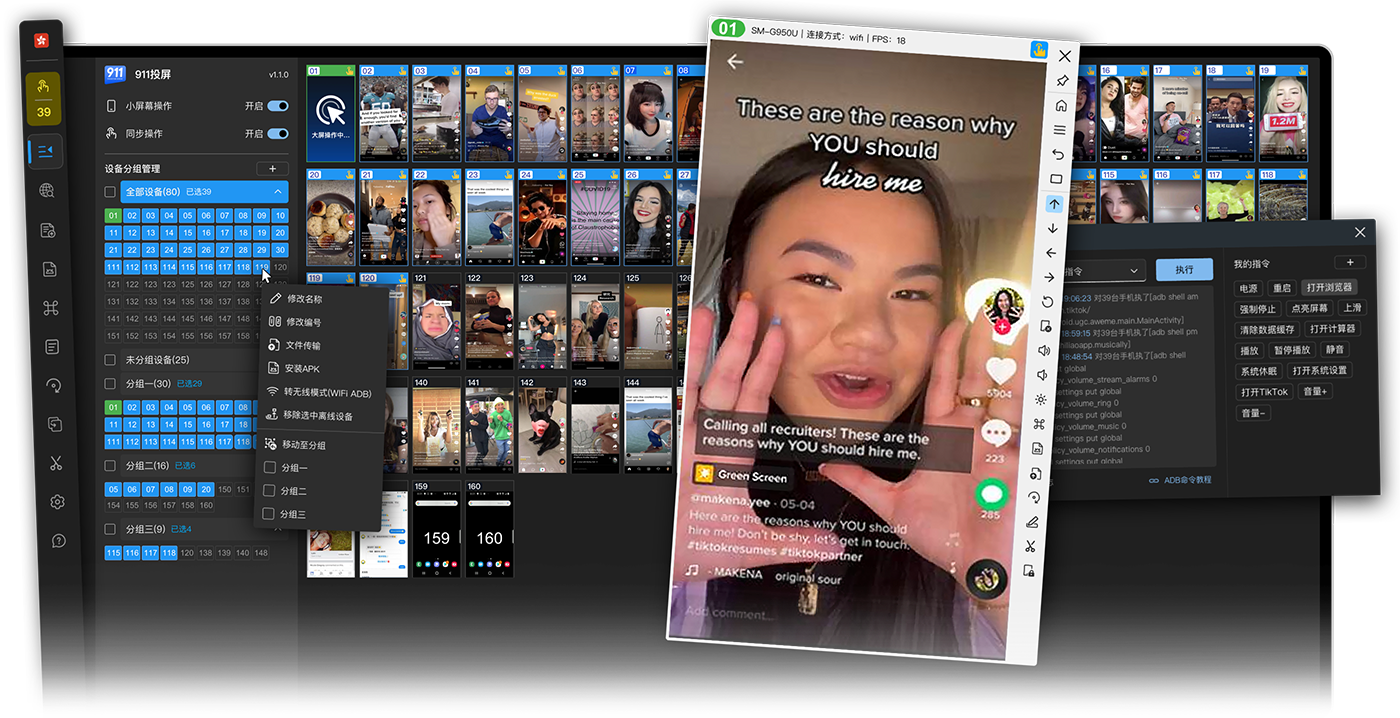
It was not until I adopted 911 Screen Mirroring and its built-in AI features that I fully resolved the operational bottlenecks of mobile store portfolio management. After extensive real-world testing, this tool fits perfectly with modern mobile-first cross-border operation scenarios, delivering outstanding cost performance and practicality for daily store management.
Many operators only view screen mirroring tools as a basic way to project mobile screens onto desktops for easier viewing and control. However, the core advantage of 911 Screen Mirroring lies in its unique combination of native mobile traffic ranking weight and AI-powered high-efficiency content generation, precisely matching the core demands of today’s cross-border multi-store operations.
Its greatest strength is full compliance with platform traffic and risk control rules. As industry practitioners know well, cross-border platforms only validate traffic generated by genuine native mobile environments. Simulators, virtual machines, and PC plug-in interventions are easily flagged by platform risk systems, resulting in traffic suppression, ranking degradation, and even account suspension. In contrast, 911 Screen Mirroring merely projects displays from physical mobile devices to desktops while preserving the complete native mobile operating environment. It never modifies device parameters or breaches platform compliance rules, fully safeguarding the organic traffic weight of stores and accounts — a critical advantage that most alternative tools cannot provide.
Additionally, it boasts universal compatibility with all mainstream large-scale AI models on the market. There is no need to install multiple AI tools, constantly switch between browser tabs, or purchase subscriptions for different AI platforms. Simply connect your operational mobile devices to 911 Screen Mirroring, and you can access full AI functionality directly via the desktop mirroring interface, enabling one-stop creation and optimization of all cross-border operational content.
In daily operations, it solves most repetitive and time-consuming tasks with remarkably obvious efficiency improvements.
For Amazon store operations, manually optimizing listing titles, product descriptions, and bullet points for a dozen stores once took me nearly half a day. The process required intensive competitor research and word-by-word revisions aligned with overseas user search behaviors. Now, with the tool’s AI capabilities, I can bulk import basic product information, generate multiple sets of differentiated, market-adaptable listing copy in one click, and optimize keyword layouts to match Amazon’s search algorithms and eliminate content homogenization. Work that once consumed an entire day can now be finished in minutes.
This tool is even more essential for TikTok store portfolio management. TikTok growth relies entirely on high-frequency, high-quality content updates, including short-video scripts, captions, hashtags, and profile optimization. Manual content creation is creativity-limited and struggles to keep pace with fast-changing overseas trends. With 911 Screen Mirroring’s AI features, users can bulk generate original short-video scripts, multilingual captions, and trending hashtag sets tailored to specific niches and real-time overseas viral trends. The AI can also analyze data from previous high-performing videos to refine content strategies, drastically boosting content output efficiency and organic reach.
Beyond content creation, it automates a wide range of repetitive daily workflows, including comment moderation, customer inquiry response templates, store performance reviews, content compliance checks, and new product launch strategy formulation, eliminating inefficient manual labor entirely.
After testing various store operation strategies, I firmly believe the era of blind bulk product uploading for cross-border store portfolios is over. Modern cross-border success depends on refined management and high operational efficiency.
Since mobile devices now dominate all platform traffic, we cannot change industry rules — we must adapt to them. 911 Screen Mirroring’s AI functions perfectly resolve the core drawbacks of mobile-only store management: cumbersome manual operations, slow content production, and unmanageable bulk workflows, while fully retaining valuable mobile traffic ranking weight.
The tool requires no complex setup or high operational costs. Pairing physical mobile devices with AI-powered screen mirroring enables streamlined unified management of multi-platform, multi-store, and multi-account ecosystems, greatly improving content generation speed and overall operational efficiency.
For all Amazon and TikTok mobile store operators, rather than wasting manpower on repetitive, low-value tasks, it is far more efficient to leverage AI tools and refocus resources on core business segments including product sourcing, data analysis, and market layout. This is the proven key to sustainable, long-term profitability for modern cross-border store portfolios.