When AI encounters group control: a new era of commanding mobile phone box clusters with natural language
When AI encounters group control: a new era of commanding mobile phone clusters with natural language
In the era of mobile Internet, the demand for managing multiple mobile phones at the same time is growing - whether it is social media marketing, application testing, or data collection, group control technology has emerged as the times require. However, traditional group control software often requires complex script writing and tedious operation settings, which makes many users hesitant. Nowadays, with the integration of AI technology, the threshold for group control has been greatly lowered: you only need to tell AI what you want to do like chatting with someone, and it can automatically command multiple phones to complete tasks.
Hardware Connection: The Fundamental Engineering of Group Control

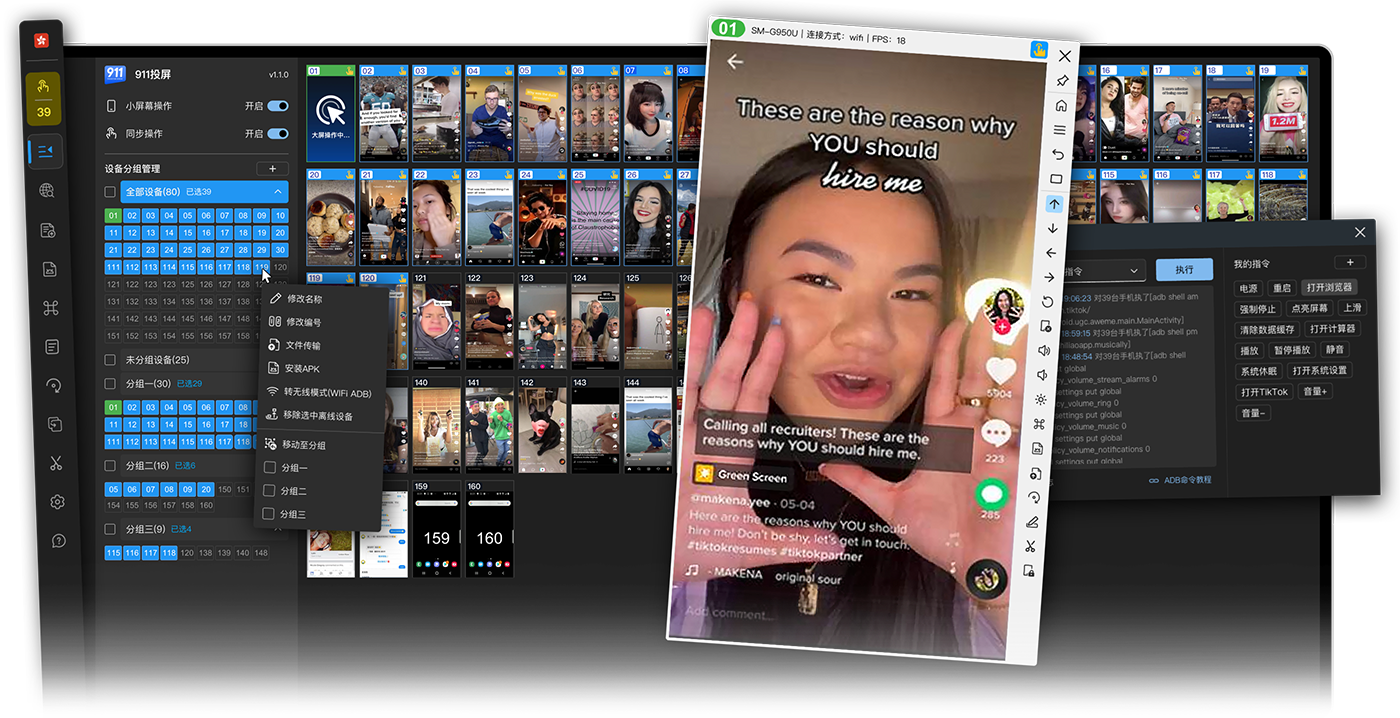
The first step in AI group control is to build a hardware connection system. This process is not complicated: first, turn on the "USB debugging" mode of each phone one by one (usually hidden in the developer options), which is the key to establishing deep communication between the computer and the phone. Next, use a data cable to connect multiple phones to the hub - the hub is like a bridge that can simultaneously connect multiple USB devices. Finally, plug the main interface of the hub into the USB port of the computer. At this point, the accompanying group control software can automatically recognize the screen image of each phone and present it in a grid format on the computer interface.
The beauty of this hardware architecture is that it retains the possibility of manual control: if you need to operate a certain phone separately, you can directly click on the corresponding screen window on the computer, and the mouse and keyboard will be mapped to that phone in real time, as if you were operating it yourself.
The core of AI group control: from "programming instructions" to "natural dialogue"
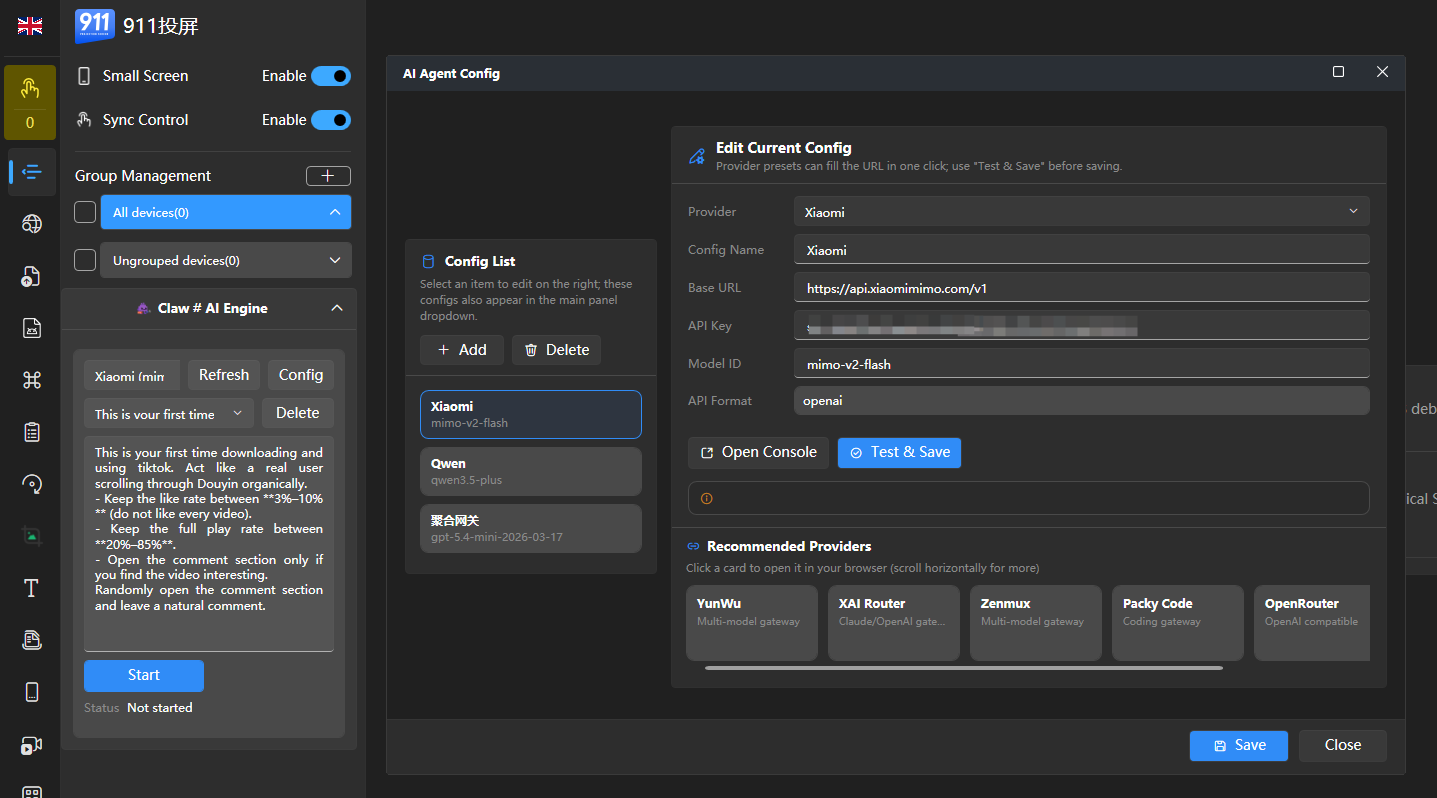
Traditional group control requires users to learn complex scripting languages, while AI group control has completely changed this situation. Taking the "911 group control" mentioned in the article as an example, after completing the hardware connection, simply open the AI function of the software and you will see a simple chat interface. You can input your requirements like sending WeChat to an assistant:
-"Open Tiktok on all mobile phones, search for 'technology evaluation', like the first five videos and comment on 'learned'."
AI will parse your natural language instructions and automatically break them down into precise operational steps: first identify the position of screen elements, then simulate clicking, sliding, inputting text, and even handle pop ups and abnormal situations. Throughout the process, you don't need to understand the resolution differences, system version differences, or app interface changes of each phone - AI will dynamically adapt.
Efficiency and Thinking: The Value and Boundaries of AI Group Control
This intelligent group control method brings at least three values: first, a leap in efficiency, as manual repetitive operations that originally required hours can now be completed in minutes; The second is zero threshold, even non-technical personnel can quickly get started; The third is to reduce errors. AI strictly follows instructions to avoid omissions and deviations in manual operations.
But we also need to be aware of the boundaries of technology. Legitimate and compliant use is a prerequisite - group control technology should serve legitimate business efficiency improvement or application testing, rather than being used for illegal activities such as brushing volume and fraud. In addition, AI is not omnipotent: it still requires manual assistance when facing verification codes, physical buttons (such as volume keys), or scenarios that require hardware interaction.
The future has arrived.
From the physical connection of USB debugging cables to using natural language to drive AI to complete tasks, group control technology is undergoing an interactive revolution. It turned 'one person commanding a mobile army' from science fiction into a daily operation. Perhaps in the near future, we only need to say into the microphone, 'Help me manage social media posts for all devices,' and AI will automatically complete content planning, scheduled publishing, and data collection - and this is the new possibility that technology has given us.